
English
English


Views: 0 Author: Site Editor Publish Time: 2026-08-19 Origin: Site


Secondary and higher education STEM programs face a persistent challenge. Instructors struggle to move students beyond isolated coding exercises or basic mechanical assembly. The goal is to transition learners into complex, systems-level engineering and iterative problem-solving. Standard robotics platforms often fall short. They fail to simulate real-world constraints like signal latency, rugged terrain navigation, and autonomous decision-making. This leaves a significant gap in practical systems engineering education, where students must learn how different subsystems interact under pressure.
The Mars rover educational robot kit provides a comprehensive, space-themed solution. It forces students to integrate mechanical design, electronics, and software under simulated aerospace constraints. By mirroring actual space exploration challenges, these kits require learners to think critically about power management, structural integrity, and autonomous logic. This establishes a rigorous framework for evaluating robotics platforms for institutional adoption, ensuring lab time translates directly into real-world engineering competency.
Multi-Disciplinary Integration: Mars rover kits uniquely combine kinematics, sensor mapping, and autonomous navigation, mirroring real-world aerospace, astrobiology, and robotics engineering.
Hardware Durability Matters: For classroom longevity, evaluating the physical build—specifically prioritizing a metal chassis robot kit—is critical to withstand repeated assembly, payload testing, and rugged terrain simulation.
Software Scalability: The most effective kits utilize open-source ecosystems (like an Arduino robot kit architecture) to allow progression from block-based coding to advanced C++ and Python.
Vendor Reliability & Curriculum: Successful implementation relies heavily on choosing an educational robotics supplier that provides modular replacement parts and structured, multi-stage lesson plans (e.g., 5 to 10+ guided activities).
Single-function educational robots severely limit student growth. Manufacturers often design them to execute one specific task, such as following a black line on a flat table or avoiding a wall in a maze. This teaches basic logic but ignores broader engineering principles. Once the student accomplishes the primary task, the hardware offers little room for expansion. A high-value STEM robotics kit must support multi-year curriculum goals rather than serving as a one-off project. It must provide a foundation where students can continuously add complexity. They need the ability to upgrade sensors, modify the chassis layout, and rewrite control algorithms as their programming skills advance.
Furthermore, standard kits rarely teach students how to handle failure. In a simple line-following robot, a failure usually means the robot stops. In a complex systems engineering project, a failure in one subsystem cascades into others. Teaching students to isolate these failures—determining if a wheel isn't turning because of a stripped gear, a burnt motor driver, or a flaw in the code—is the core of engineering education.
Project-based learning must mimic actual engineering challenges to be effective. Mars rover kits introduce students to the rocker-bogie suspension system used by NASA. This mechanical linkage lacks springs or stub axles. Instead, it uses a differential bar that connects the left and right sides of the rover. This kinematic linkage ensures that pitch angles are halved when one side of the rover drives over a rock, allowing the vehicle to maintain stability and keep all wheels on the ground while climbing over obstacles twice the diameter of a single wheel.
Simulating delayed communication protocols forces students to abandon real-time remote control. Instructors can mandate a five-second delay between sending a command and the rover executing it. This artificial latency forces students to design different ways to solve mobility problems. They must rely on pre-programmed sequences and autonomous decision-making to navigate simulated Martian terrain, rather than relying on human reflexes.
Successful adoption of a complex robotics platform requires clear, measurable outcomes. Instructors should evaluate student progress based on specific technical competencies rather than just completing the build.
Students must demonstrate proficiency in troubleshooting interconnected systems using multimeters and serial monitors.
Learners must implement closed-loop control, where sensor feedback directly influences motor output to maintain a straight heading over uneven terrain.
Teams must successfully integrate disparate hardware and software components to achieve mission-based objectives, such as navigating a debris field without human intervention.
Students must document their iterative design process, explaining why they chose specific gear ratios or sensor placements based on physical testing.
Assembling a Mars rover introduces advanced mechanical concepts rarely seen in standard classroom kits. Students learn the kinematics associated with complex suspension systems, specifically focusing on six-wheel drive mechanisms. They must calculate the center of mass and adjust the differential bar on the rocker-bogie suspension to ensure all six wheels maintain ground contact. If they assemble the linkages incorrectly, the rover will flip on a 20-degree incline. This immediate physical feedback is far more effective than reading about statics in a textbook.
Traction on uneven terrain becomes a practical physics lesson. Students analyze friction coefficients and wheel tread designs to maximize grip on loose sand or gravel. Additionally, students explore the mechanics of multi-axis, motorized sample collection arms. These components mimic the real Perseverance rover's ability to manipulate, grasp, and collect geological specimens. Building these arms teaches spatial geometry, leverage, and the mechanical limits of servo motors under load.
Wiring a rover requires meticulous attention to detail. Students learn to read wiring schematics, manage voltage regulation, and handle power distribution across complex setups. A standard rover build requires balancing power between six DC drive motors and multiple servo motors used for steering and arm manipulation. This introduces the concept of power budgets.
Students quickly discover that activating all motors simultaneously causes massive voltage drops. This voltage sag often resets the main microcontroller, abruptly halting the mission. To solve this, students must learn to implement buck converters, separate logic power from motor power, and write code that staggers motor startup times to reduce peak current draw. Managing these power constraints directly mirrors the challenges of deep-space exploration, where solar energy is strictly limited and battery discharge rates must be carefully monitored.
The software curriculum naturally progresses from manual remote control to autonomous operations. Students begin by writing basic scripts to translate joystick inputs into coordinated wheel movements. They learn about PWM (Pulse Width Modulation) signals to control motor speed. Next, they transition to sensor mapping and spatial awareness.
By integrating ultrasonic sensors and IMUs, students program the rover to detect obstacles and measure incline angles. They write state machines to dictate how the rover behaves in different scenarios. For example, if the IMU detects a pitch exceeding 25 degrees, the state machine overrides the forward drive command and initiates a reverse sequence to prevent a rollover. Advanced students can integrate AI modules for object recognition, writing algorithms for autonomous route planning that allow the rover to calculate the most efficient path to a target while navigating around impassable terrain.
Engineering Disciplines and Learning Outcomes Summary
Engineering Discipline | Core Concepts Taught | Real-World Aerospace Application |
|---|---|---|
Mechanical Engineering | Rocker-bogie suspension, weight distribution, multi-axis kinematics | Designing chassis for rugged extraterrestrial terrain navigation |
Electronics & Power | Voltage regulation, PWM motor control, power budgeting | Managing limited solar power across multiple rover subsystems |
Software Engineering | Closed-loop control, sensor data parsing, route planning algorithms | Autonomous navigation during communication blackouts |
Systems Integration | Hardware-software interfacing, signal latency mitigation | Ensuring mission reliability without real-time human intervention |
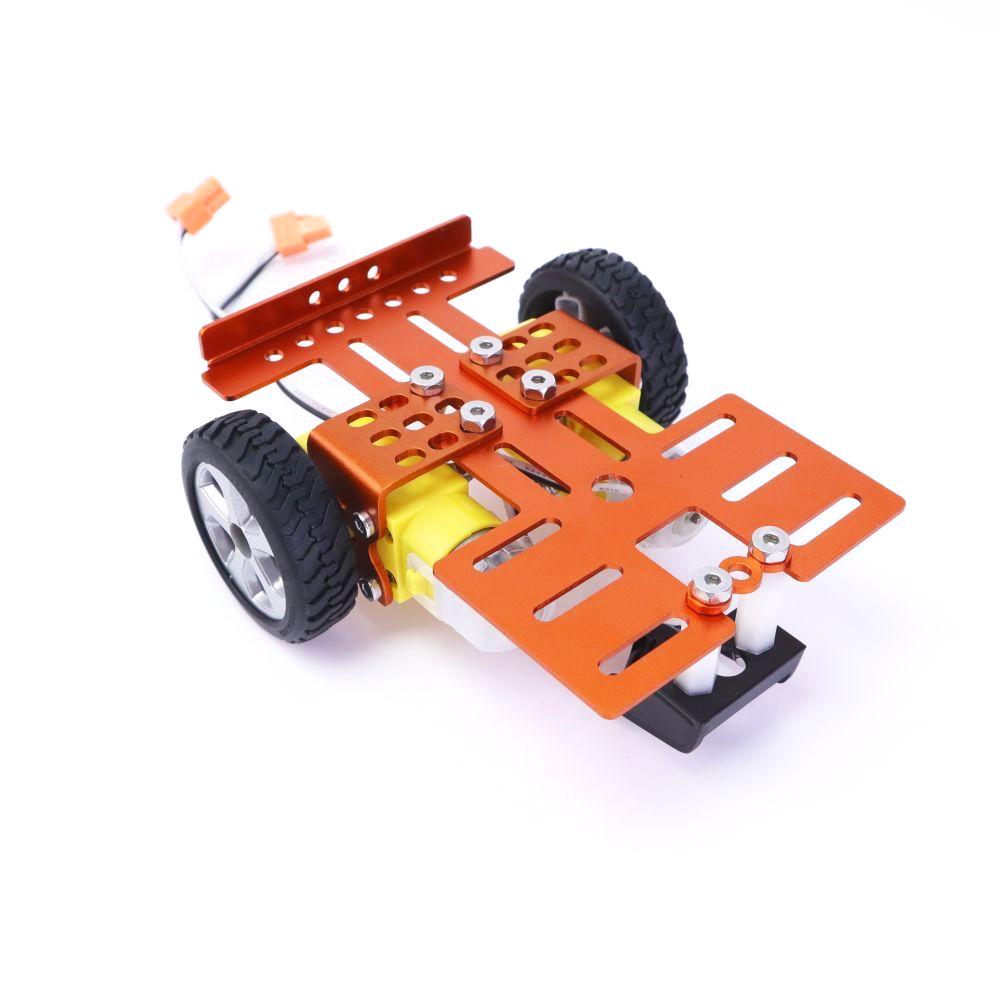
The physical build of a robotics kit determines its viability in a classroom setting. Comparing the lifecycle of plastic components versus a metal chassis robot kit reveals stark differences in high-use environments. Plastic frames often suffer from stripped screw threads, warping under heavy payloads, and snapping during accidental drops. Acrylic components are particularly brittle and rarely survive a full semester of rigorous testing.
Metal chassis construction offers superior durability and structural rigidity. Aluminum extrusions and stamped steel brackets ensure the platform survives years of rigorous use. While metal components increase the initial weight and require stronger motors, they provide the precise tolerances necessary for complex mechanical linkages like the rocker-bogie system. This durability ensures the kit can be disassembled and rebuilt by multiple cohorts of students over several years without degrading the structural integrity of the pivot points.
Authentic rover mobility requires specific actuator characteristics. High-torque DC gear motors are absolutely necessary for incline climbing and navigating over simulated rocks. Standard high-speed, low-torque motors will stall when the rover encounters resistance, leading to burnt motor drivers and frustrated students. Instructors must verify the stall current and torque ratings of the included motors before purchasing.
Furthermore, evaluating servo quality is critical. Instructors must prioritize metal-gear servos over plastic-gear alternatives. Plastic gears strip easily when a robotic arm attempts to lift a heavy specimen or when a steering mechanism gets jammed against an obstacle. Metal-gear servos provide the resilience needed for reliable robotic arm manipulation and precise directional control, drastically reducing the need for mid-semester repairs.
A static hardware platform quickly loses its educational value. Assess how easily the hardware can be modified or expanded. The chassis should feature standardized mounting holes (such as M3 or M4 threading) that accept third-party sensors, custom 3D-printed parts, or upgraded microcomputers. It should also include standard I2C expansion ports for adding new electronic modules.
This modularity allows students to design and attach custom payload bays, specialized environmental sensors, or upgraded camera gimbals. An expandable platform encourages iterative design. It allows students to continuously refine their rover based on testing feedback and new mission parameters, rather than being locked into a single, unchangeable configuration dictated by the manufacturer.
Selecting the right processing core dictates the entire software experience. Evaluating the benefits of an Arduino robot kit architecture or a Raspberry Pi-based system is crucial for a Mars rover project. Open-source hardware prevents vendor lock-in, ensuring that schools are not forced to use proprietary, subscription-based coding environments.
Arduino provides a rugged, real-time processing environment perfect for motor control, reading analog sensors, and generating precise PWM signals. It boots instantly and handles hardware interrupts efficiently. As students advance, these open-source platforms provide access to extensive community libraries. This allows learners to integrate complex mathematical functions, PID controllers, and advanced hardware without waiting for the original vendor to release software updates.
The true value of a rover lies in its ability to collect data. The learning curve for integrating ultrasonic sensors, LiDAR, and IMUs teaches students how to process raw environmental data and filter out sensor noise. An IMU, for example, allows the rover to determine its pitch and roll. Students must write code to parse the raw accelerometer data, apply a complementary filter, and use that data to prevent the rover from driving up an incline that exceeds its tipping point.
Environmental sensors can be used to simulate astrobiology and geological studies. Students can program the rover to analyze color, temperature, or gas concentrations. They can navigate the rover to a specific coordinate, deploy a sensor probe, and log the data to an SD card. This mimics how real rovers study the chemical composition of Martian rocks to search for biosignatures, bridging the gap between computer science and earth sciences.
Educational tools must adapt to the learner's proficiency. A Mars rover robot kit for students must support multiple programming languages to remain relevant across different grade levels. Beginners should have access to block-based coding environments where they can grasp the logic of loops, conditionals, and variables without fighting syntax errors.
As their understanding deepens, the environment must seamlessly transition to advanced text-based algorithms using C++ or Python. This scalability ensures that the same hardware platform can be used for middle school introductory logic and university-level autonomous navigation courses. It maximizes the utility of the hardware investment, allowing a single kit to serve multiple departments within an educational institution.
Building a multi-axis, six-wheel rover is not a single-period activity. Address the reality of assembly time before implementation. Complex rover kits require dedicated lab hours and meticulous organization. Standard 50-minute class periods are often insufficient for deep systems integration work.
Evaluate kits based on the inclusion of structured, multi-stage lesson plans. A well-designed curriculum will break the build into distinct activities. This modular approach allows students to build, wire, and test the suspension system in one module, before moving on to the robotic arm or the sensor array in subsequent lessons. This prevents overwhelming students, allows for incremental grading, and fits much better into standard academic scheduling.
Complex systems inevitably fail, and troubleshooting is where the most valuable learning occurs. However, instructors must identify and mitigate the risk of "black box" failures, where students cannot isolate whether an issue is mechanical, electrical, or software-based. Without a structured approach, these failures lead to severe student frustration.
Provide structured testing protocols to mitigate this. Teach students to perform component-level verification before full assembly. For example, they should use a multimeter to verify motor function and test individual servos with basic code before mounting them into the chassis. They should use serial monitors to verify sensor outputs before writing the navigation logic. Teaching this rigorous engineering design process turns failures into structured learning opportunities rather than classroom roadblocks.
Physical hardware degrades in a classroom environment. Acknowledge the inevitability of stripped gears, burnt motor drivers, frayed wires, and lost screws. Implementing a complex robotics program requires establishing a strict inventory management system for kit components.
Instructors should utilize compartmentalized sorting trays and require students to audit their hardware at the end of each lab session using a standardized checklist. Proactive maintenance protocols, such as checking wire connections, lubricating gearboxes, and tightening structural standoffs, will significantly extend the lifespan of the rover kits and reduce downtime during critical project phases.
Hardware is only as useful as the instructional materials that accompany it. Evaluate the depth of provided documentation rigorously. A viable educational robotics supplier must offer significantly more than a basic step-by-step build manual. They need to provide comprehensive educator guides, grading rubrics, and detailed troubleshooting flowcharts.
Look for NGSS-aligned lesson plans that connect the physical build to core scientific principles. The documentation should explain the physics of the suspension system, the math behind the sensor data, and the logic of the autonomous algorithms. This empowers instructors to teach the theory alongside the practical application, ensuring the robotics program meets institutional academic standards.
The long-term success of a robotics program hinges on hardware maintainability. Assess the supplier's policy on individual component sales before making a bulk purchase. Avoid vendors that require purchasing a full new kit just to replace a single proprietary motherboard, a broken suspension linkage, or a stripped servo.
A reliable supplier will offer an extensive catalog of individual replacement parts, from structural beams and fasteners to individual sensors and motor drivers. This modular approach to hardware replacement ensures that kits remain operational year after year without draining departmental budgets on redundant complete kits. It allows schools to maintain a dedicated spare parts bin, keeping students working even when components inevitably break.
A Mars rover educational robot kit represents a high-yield investment for advanced STEM programs. It successfully bridges the gap between basic coding exercises and complex systems engineering. Provided the hardware is durable, the software environment is open and scalable, and the accompanying curriculum mimics real-world engineering challenges, these kits offer unparalleled practical value. They force students to navigate the exact constraints faced by aerospace engineers, turning abstract concepts into tangible, mechanical realities.
When selecting a platform, stick to strict evaluation criteria. Prioritize metal chassis construction for classroom longevity. Demand open-source microcontroller architectures to ensure software scalability and prevent vendor lock-in. Require comprehensive, modular lesson structures that break complex builds into manageable phases. Finally, ensure robust vendor support with accessible replacement parts to guarantee the long-term viability of the program.
To move forward with implementation, take the following steps:
Audit your current lab infrastructure to ensure you have the necessary tools, multimeters, and storage solutions for complex hardware builds.
Review your existing STEM curriculum to identify where a multi-week systems engineering project best aligns with your learning objectives.
Request sample documentation and lesson plans from shortlisted suppliers to verify the depth and quality of their educational materials.
Order a single pilot kit to test the assembly process, software integration, and hardware durability before committing to a full classroom deployment.
A: These platforms scale across multiple age groups. Middle school programs use them for basic mechanical assembly and block-based coding. High school and university engineering courses leverage the exact same hardware for advanced C++ programming, closed-loop motor control, and integrating AI modules for autonomous navigation. The complexity depends entirely on the software environment and the specific sensor payloads attached.
A: Students attach environmental sensors and motorized sample collection arms to the chassis. They write code to navigate the rover to specific coordinates, deploy the arm, and read data from gas or color sensors. This process directly mirrors how real rovers like Perseverance analyze rock chemistry and collect geological specimens, teaching students the practical application of remote data gathering.
A: Yes. An Arduino microcontroller easily handles basic autonomous navigation. It processes data from ultrasonic sensors and inertial measurement units (IMUs) to avoid obstacles and map simple routes. For advanced applications requiring real-time image processing or complex LiDAR mapping, students typically transmit the Arduino sensor data to a more powerful microcomputer like a Raspberry Pi.
A: Metal frames provide superior structural rigidity. In a lab environment, students repeatedly assemble, modify, and disassemble the hardware. Plastic threads strip quickly, and acrylic frames often snap under heavy payloads or during accidental drops. Aluminum or steel components ensure the platform survives years of rigorous use, maintaining the precise tolerances required for complex suspension linkages.
A: Standard kits include ultrasonic sensors for distance measurement, line tracking modules, and IMUs for pitch and roll detection. Advanced packages add basic camera modules, light sensors, and temperature probes. These components allow students to program obstacle avoidance, maintain chassis stability on steep inclines, and simulate environmental data collection.
A: Reputable suppliers maintain an extensive catalog of individual, off-the-shelf components. Schools can purchase specific motors, structural beams, or sensor modules as needed. You must avoid vendors that lock you into proprietary ecosystems, forcing you to buy entirely new kits just to replace a single stripped servo or burnt motor driver.
A: Yes. These builds strongly align with Next Generation Science Standards (NGSS) and university engineering benchmarks. They specifically address core requirements for systems thinking, iterative design, and complex problem-solving. Students move beyond theoretical physics and computer science, applying those concepts directly to applied engineering practices and closed-loop control systems.


